Wednesday, March 31, 2010

Rest in Peace Scotch, 2004-2010


My cat Scotch died today.

I held her in my arms as she was being euthanized. I sobbed and sobbed.

Scotch was a beautiful cat. She was black and white - or commonly known as a "tuxedo cat."

She was born in my daughter's closet, almost exactly six years ago - in March 2004. She was twins with another cat. My daughter named one Butter, the other Scotch. Months later, we gave her siblings away to other homes, although her brother Reggie lived with us until he ran away a few years later.

Scotch once got out of the house when she was a kitten. A furious snowstorm pounded our town that night. She went missing for two days, but I later found her in the elementary school parking lot down the street.

I sighed with relief when she and I walked through the front door that night. My daughter Madeline and son Aidan were thrilled to be reunited with her.

Scotch's mother, Bright Eyes, had a mean temperament, but we loved her. She was hit by a car in early 2005. I still miss her.

Scotch and I were always very close. She would sit on my lap for long periods of time. She often slept on my bed, sometimes right smack on top of me. As a sign of affection, she liked to gnaw lovingly on my finger while she purred. I'd say, "Bite my finger, Scotchie..." And she'd happily oblige.

Back in 2007, Scotch got quite sick with symptoms similar to those that she developed in recent weeks. The first time she came down with this liver and kidney problem, I fed her moist cat food mixed with water through a tube in her throat. She impressed me with her courage and soon rallied to a recovery.

I have learned so much from Scotch over the years. We've spent so much time together. She was always one of my closest friends.

I miss her terribly already. I'd give anything to have her sitting in my lap purring one more time.

Earlier today, I read about a man named Larry Kruger in Pensacola, Florida, whose house always gave off a terrible stench in the summer. Police raided the home the other day and 161 cats - some dead, some living (but barely) - in his home. Several were packed into the freezer. The ones still alive were in such bad shape that they had to be euthanized.

Frankly, I'd like to find Larry Kruger and beat the living daylights out of him. No cat deserves to live such a horrible life.

Scotch, I know, would agree with me. She had a good life. It was too short, though. She was only six - the equivalent of 40 human years. It made me happy to hold her in my arms as she was being put down, even though I wept harder than I've ever wept before. I was there for her. I said goodbye to my friend and kissed her on the head.

And as I walk the halls, my house seems a little emptier. Our place is home to another cat, Gibson, who's currently looking around corners to see if he can see his best friend.

Scotch may be gone, but she will never - ever - be forgotten. From here on out, this Blog is dedicated to my baby.

Monday, March 29, 2010

More Victims of the Immoral Factory Farm System


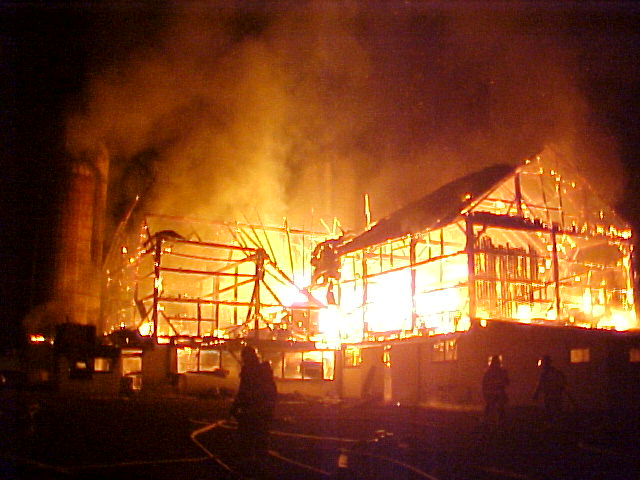
Days ago, there was a horrible fire at the Ohio Fresh Eggs company near Marseilles, Ohio, that resulted in the deaths of 250,000 chickens. (Source) That's pretty staggering when you think about it - a quarter of million. It is difficult for me to wrap my head around those numbers.

Many of the chickens died in the blaze, although a substantial number were also euthanized after the fire to put them out of their misery.

250,000

What is even more troubling is that mass animal deaths as a result of farm fires is a fairly regular occurrence. Here in Canada, pigs are often the victims of blazes.

It was almost precisely two years ago that 7,000 pigs perished in a fire in a barn at a Manitoba Hutterite community. (Source)

In January 2009, a barn fire near Hadashville, Manitoba, killed 900 hogs. (Source) Later that month, in east-central Saskatchewan, a blaze that swept through four large hog barns killed all of the animals inside. (Source) In December 2009, 1200 pigs died in a barn fire near St. Catharines, Ontario. Around the same time, 800 pigs perished in flames at a farm outside of Stratford, Ontario. (Source)

And at Wingham, Ontario, earlier this month, 5,000 pigs died in a raging inferno. (Source)

All of these tragedies had something in common: They were avoidable.

In addition to being scenes of horrific slaughter, factory farms are also tinderboxes full of flammable materials. And the animals inside of their walls have no rights. They're regarded as property. When they burn to death, their only obituary is typically a short article buried inside of a newspaper.

250,000... 900... 7,000... 1200... 5,000... 800...

It's all miles to the moon. And the victims of these fires are mere commodities in the eyes of most people.... Nothing more than numbers for the insurance company.

Imagine the final moment for those quarter of a million hens or those 7,000 pigs. All they knew was the ghastly terror of fire closing in on them, burning them to death - one of the most excruciatingly awful ways to die.

How many more reasons do we need to abolish the factory farm system? And how much longer do we have to wait until this system of mass, assembly line murder is finally done away with?

Friday, March 26, 2010

Introducing Hegans! I guess I am one!

The Boston Globe has come up with a new word to add to the already overcrowded English language:


The Globe article describes a middle-aged Boston omnivore named Joe McCain who was overweight (topping the scales at 257) and feeling lousy much of the time. At the advice of a pal, McCain eliminated all foods containing animal products from his diet - meat, eggs, milk items, etc. etc. - and became a vegan. Thanks to a combination of veganism and yoga, McCain has lost sixty pounds. Apparently, he is part of a larger nationwide trend of middle-aged guys embracing veganism.

And all this time I thought - as a convert to veganism at age 41 - I was alone! I guess there are a lot of other thirtysomething and fortysomething dudes doing what I'm doing. I am not so unique after all, it seems...

Here is a quote from the Globe article:
The buff and bright-eyed McCain is the new face of veganism: men in their 40s and 50s embracing a restrictive lifestyle to look better, rectify a gluttonous past, or cheat death. They are hegans. They are healthy. And they are here to stay. While no one was looking, guys were stepping up to the wheatgrass bar. Famous hegans include “Spider-Man’’ Tobey Maguire and singer Thom Yorke of Radiohead. Atlanta Falcons tight end Tony Gonzalez was vegan for a few years but now eats seafood and chicken on occasion.
So watch out, North America. Hegans appear to be growing in number. If you don't believe me, Salon.com has also taken note of the Hegan phenomenon. Once Hegans make it into Salon, we have found our express route to the dizzying heights of pop culture stardom. Salon says that our ranks include "cops and firefighters," and that we Hegans are men who aren't afraid to be seen "eating their veggies."

Silly stuff, to be sure. It is hard to say how many of these men are "Conscientious Hegans," which I suppose is what I am: Hegans who stopped eating animals due to the development of moral and ethical concerns about the rights of the animals that we spent most of our lives devouring. Moral Hegans, I guess you could call us. Or Mor-Hegans.

Perhaps some of the "Hegans by Convenience" will go back to eating animals (like the aforementioned Tony Gonzalez) once they've achieved whatever it was they set out to achieve. Who knows?

But at least our numbers are growing. Frankly, I don't give a damn why people become vegans. I just hope they stay vegans.

Whoops, I mean, er, uh, "Hegans."

Not to be confused with "Hegelians." Or "He-Man."

OK. I'll quit while I'm ahead.

Tuesday, March 23, 2010

Thinking of Adopting a Bunny for Easter? Support Farm Sanctuary Instead!

All across North America - in the United States and Canada - people mark the arrival of Easter in different ways. The Easter Basket full of candy, fake grass and toys is one way of celebrating the holiday. Sadly, another way involves live animals. Well-intentioned parents end up giving their children real bunnies for Easter. Rabbits are often cheap around Easter, with a lot of pet stores selling them for around ten dollars. (Source) Normally, I'd say it's a great idea to give these bunnies loving homes. But what often happens is parents buy bunnies for their kids and then eventually the families abandon these poor animals.

This is where my friends at Farm Sanctuary in Watkins Glen, New York, come in. They are urging parents not to adopt bunnies for their kids at Easter unless the families have long-term plans to provide loving homes for the animals. Instead, Farm Sanctuary is urging parents to support an animal resident at Farm Sanctuary. As the Farm Sanctuary Website notes:

The animal residents at Farm Sanctuary’s shelters, many of whom were rescued after being given as “Easter gifts,” depend on adoptive “parents” to provide them with healthy food, a safe habitat, individualized attention and veterinary care. Through the nonprofit organization’s Adopt-A-Farm Animal Project, parents can help give rescued animals a new beginning and inspire compassion in their children by sponsoring an animal in the name of their child (or in their own name). Each unique sponsorship package includes a personalized adoption certificate and beautiful color photo that make the perfect addition to any Easter basket.

What a great idea. Let's hope that before rushing out and adopting a cute bunny or chick (back in 2007, Farm Sanctuary also adopted 49 baby chicks - dyed purple, blue, pink, orange and green - from a Brooklyn pet store), parents decide to sponsor a Farm Sanctuary resident. Also, the wonderful folks at RabbitRescue.ca here in Ontario have been working hard for years to find loving homes for rabbits and they feature sponsorships, too. Check out their Website here. Unless families plan a lifelong commitment to a new member of their family, sponsoring animals is a far more humane way to go.

A Decent Showing in Atlanta...

In Atlanta, Georgia, activists staged a protest against the seal hunt in front of the Canadian consulate downtown. There weren't many of them - only about 12 - but what they lacked in numbers, they made up for in principles and integrity. The protest included gruesome undercover video scenes of the seal hunt and passing out literature. Activists urged passersby to protest the seal hunt in various ways. It wasn't a huge event, by any means, but it got the word out and showed that there are good, nonviolent ways to protest against the violent madness that is the seal hunt.

Friday, March 19, 2010

Seal Hunt Quotas on the Rise...

After that last Blog Entry, I don't want to get accused of picking on misguided militants more than those carrying out widespread systematic violence toward animals. So...

Here's the latest news on the Canadian seal hunt from AFP:

OTTAWA — Canada's fisheries minister on Monday hiked the total number of seals that hunters would be allowed to slaughter during an annual Atlantic coast hunt set to begin later this month.

The total allowable catch for harp seals this season will rise to 330,000, from 280,000 last year, while quotas for grey and hooded seals will remain unchanged at 50,000 and 8,200 animals, respectively.

The reason cited by officials for the increased quota is a growing seal population in the Gulf of St. Lawrence and in waters east of Newfoundland.

"This government is united in its support of the thousands of coastal Canadian sealers who rely on the seal hunt for their livelihood," Fisheries Minister Gail Shea said in a statement.

"The seal hunt is a sustainable activity based on sound conservation principles."

The estimated populations of the grey and hooded seal herds are over 300,000 and 600,000 respectively and "continue to grow every year."

The harp seal population, meanwhile, is estimated at 6.9 million "or more than triple what it was in the 1970s."

Around 6,000 Canadians take part in seal hunting each year along the Atlantic coast, and 25 percent of their sales came from exporting products to Europe.

The 27 European Union states in July 2009 adopted a ban on seal products, ruling the goods could not be marketed from 2010.

Canada and Greenland account for more than 50 percent of the 900,000 seals slain in the world each year. Other seal-hunting countries include Norway, Namibia, Iceland, Russia and the United States.

I hear Canadians say, over and over again, that it's wrong to oppose the seal hunt because people rely on it for their livelihood. OK, point well taken.

But far, far more whites in the American South relied on slavery for their livelihood in the 19th Century. They made the same arguments: Abolish it and the result will be a disaster for the poor souls (in this case, poor white souls) whose well-being and survival depend on it.

Similarly, today, if the cocaine trade were wiped out, numerous villages in Bolivia, Colombia and Ecuador that survive on the cocaine economy would be decimated economically. Same thing with villages in Afghanistan if heroin and opium were suddenly stamped out. A lot of struggling Afghans who rely on the heroin and opium trades would be hurt. But that doesn't legitimize those trades; it merely shows that when you get rid of some sort of lucrative economic resource, the results can be very painful and difficult for ordinary people. But the alternative of maintaining immoral industries is deeply troubling.

I am sympathetic to the people who rely on seal hunting for a living. There is no denying, however, that the practice itself is ghastly and brutal.

The seal hunt rivals factory farming in its barbarism. I don't advocate throwing pies at Gail Shea or blood at people who wear fur, and I certainly think many of the anti-seal hunt types - who traipse into Canada to protest and traipse out again - have been insensitive to the plight of the seal hunters. But I agree - 100 percent - with those who believe that this is a cruel practice.

That said, it's no crueler than manufacturing leather products. It all comes from the same place.

When I think of these things, I'm reminded of a Wisconsin serial killer named Ed Gein (1906 - 1984), who made all kinds of crafts out of the remains of the people he butchered. When police finally caught him, they found lampshades made of skin, human skulls on bedposts, scalps sewn together to make slipcovers, and various objects made of human bones.

Such discoveries shocked the world. Maybe the day will come when the way we currently use animals will prove equally shocking to future generations.

Then again, maybe not. I don't always have a hell of a lot of faith in human beings.

When You Mix Immaturity With Radicalism, You Get...


A few days ago, ex-vegan Lierre Keith (pictured right; see her website here) was giving a talk at an "anarchist" book fair in San Francisco when - suddenly - a group of masked thugs swarmed out from backstage and pelted her with cayenne-pepper laced pies.

What did she do to deserve it? Well, Keith wrote a book titled The Vegetarian Myth, in which the ex-vegan criticizes the vegan lifestyle as unhealthy and insists that mass agriculture is actually destroying the planet.

(For the record, Keith also opposes factory farming, which she believes is destroying the planet, too...)

Her arguments are provocative. I haven't read the book - I've only read about it online. I can't say whether it's good or bad. I am very happy she wrote it because I think these issues need to be debated.

About halfway through Keith's talk, a group of masked vegans swarmed out and tossed pies at her. "Go vegan!" they shouted during their assault.

I am reminded of the overzealous animal rights activist who tossed a pie at Canada's federal Fisheries Minister Gail Shea. Shea's crime? Supporting the seal hunt.

Vegans and animal rights activists have to knock off this ineffectual crap. These are nothing more than heavy-handed attempts to quash free speech.

Without doubt, the worst outcome of these actions is their chilling effect. The message is clear: If you dare oppose the animal rights movement or if you advocate a position that in any way results in harming animals, you'd better look over your shoulder.

Throwing a pie at someone is a violent act. And a stupid act. And, worst of all, it is a marginalizing act. And guess who gets marginalized? Not the person who gets slammed with the pie. No, it is the pie thrower who ends up getting dismissed as the lunatic.

Luckily, the overwhelming majority of vegans reject this sort of crazy behavior. Most of us embrace a nonviolent position that respects the dignity of all human beings and animals.

It is important for us, therefore, to condemn these sorts of occurrences. Lierre Keith was absolutely right when she told the San Francisco Chronicle: "The whole thing was designed for social humiliation. We're supposed to be against sadism and cruelty and domination, and these people are willing to do this to me."

As a vegan and a libertarian, I am not willing to curb anyone's right to free speech under any circumstances. Ever.

Finally, what kind of an anarchist throws pies at his or her political foes? Answer: Someone who really isn't an anarchist, someone who could probably use decent psychiatric care to address a host of emotional problems. For these people, anarchism is nothing more than window dressing to make thuggery seem more grandiose.

Monday, March 15, 2010

Encouraging Signs from Israel: The Earth's First Fur-Free Nation?


(Above: A video from the Anti-Fur Coalition, one of the groups campaigning for a fur-free Israel.)

What a thrill it is to see that Israel is leading the way in the struggle to end the fur trade. There is currently a bill in the Israeli Knesset that, if passed, will ban the fur trade in Israel. If all goes according to plan, Israel might be the first nation on earth to ban the fur trade. A fur-free Israel. My, but that has a wonderful ring to it!

Our comrades in Israel have made great strides, thanks to such organizations as Anonymous for Animals and other groups that are on the forefront of the global struggle for animal rights. The fact that Israel has a thriving democracy makes it possible for animal rights groups to exercise great influence.

The group Anonymous for Animals, based Tel-Aviv, chose their name, according to their website, "out of deep solidarity with the suffering of those sentient beings, without name or identity, known to us only in their unimaginable numbers, who are subjected to systematic abuse. They are imprisoned in laboratories, circuses, municipal pounds - but above all: in factory farms. They are all anonymous. They all need our help."

Thanks to such groups, Israel has very stringent animal welfare and protection laws. Animal dissection is banned in public schools. Circuses are not allowed to force trained animals to perform for audiences. And the highly controversial dish foie gras has been outlawed in Israeli restaurants.

Paul McCartney, musician, singer, animal rights activist and vegetarian, is praising Israel for leading the way in the struggle against the fur trade. The Israeli newspaper Haaretz quotes McCartney's Website as saying:
"By banning such a cruel industry Israel would provide a shining example in care and compassion that others would be sure to follow." (Source)
I also quote Michal Lewin-Epstein's excellent column on Huffington Post:
A survey, commissioned by the International Anti-Fur Coalition and Let the Animals Live, conducted immediately after the February 2009 media investigation, showed that 86% of Israelis believe killing animals for fur is immoral. Moreover, nearly 80% back a bill calling for ban of fur trade in Israel. This media exposure and public support, together with the long-standing joint efforts of the International Anti-Fur Coalition and the Israeli organization Let the Animals Live, recently pressured Israeli Members of Knesset to endorse a law that would limit or eliminate the fur trade in Israel.

If this anti-fur bill is approved in the Knesset - and many seasoned political observers believe it will be - Israel will be the first fur-free country in the world. Israel, as Paul McCartney points out, will lead the way in the struggle for animal rights. This has a lot to do with the country's pluralistic democracy, which allows advocates for animals to fight the good fight without any repression or hindrances from the government. And if Israel goes fur free, this will be a huge, huge victory - and an example for all other nations.

The International Anti-Fur Coalition has been one of the groups involved in the struggle to ban fur in Israel. They're a great group and they have a lot of support among the Israeli people. I will let them have the final say:

Israel takes a giant step, approving expansion on anti-fur bill to include all animals

The Israeli Government approves unanimously a bill that brings Israel one step closer to becoming the first fur-free country

In one of the most important achievements in the combined efforts of the ‘International Anti-Fur Coalition’ and ‘Let the Animals Live’ in their endeavors to protect fur bearing animals, the ministerial committee for legislative affairs accepted their request and approved unanimously the expansion on MK Ronit Tirosh’s bill. The bill prohibiting originally only the trade of cat and dog fur and was approved on its first reading; has been expanded by amendment to include all fur from all mammals. The ban includes an exception on specific fur hats worn by a few people for cultural identity. This bill is a global and historic precedent.

The total ban on all fur from all animals in addition circumvented the anticipated complexity that would have behooved the customs authority in distinguishing the animal of origin of each particular fur item.

Agriculture Minister Shalom Simhon and Minister of Environmental Protection Gilad Arden addressed the Ministerial Committee with the assistance of Minister of Education, Gideon Saar. Jane Halevy of the International Anti-Fur Coalition and attorney Joshua Rotbert, legal adviser of Let the Animals Live are the ones that initiated the matter with the help of MK Nitzan Horowitz via bringing to the government’s attention the cruel truth behind the needless fur trade.

Now that the legislative committee unanimously approved the amendment, the Education, Culture and Sports Ministry committee will hold a vote on the amendment later in the month and following their approval the bill will be put to a second and then third reading before finally being passed into law. The vast majority are hopeful that the Israeli government will continue on the path to end needless animal cruelty.

Sunday, March 14, 2010

Jonathan Safran Foer on the Ellen DeGeneres Show


Jonathan Safran Foer was recently the guest star on the Ellen DeGeneres Show. This was his second appearance on Ellen's show. Ellen, FYI, is a committed animal rights supporter and vegan. I love Safran Foer's approach and share pretty damn close to 100 percent of his views on the issues of animal rights and veganism. Please have a look at this video. This guy is brilliant. In November 2009, Safran Foer appeared on Ellen's show for the first time and he was equally wonderful. I'm including it here, too (below).


Safran Foer's book Eating Animals is having a huge impact. The book is an astonishing Number 38 on Amazon.com's sales ranking. It's a fantastic book and I believe it should be mandatory reading in every school across North America.

Dreena Burton, one of the best vegan chefs out there and the self-proclaimed "Vegan Soccer Mom," points out, "Five years ago the diet was not being discussed in the mainstream media." Now, by contrast, we're hearing about it fairly often. As Burton notes:

The vegan population is estimated at only about 0.5%, or 1 million people. The number of lacto-ovo vegetarians is higher at about 10%. So, for now, I’m not expecting to see the shopper next to me eschew their cheddar, eggs, chicken breasts, and frozen yogurt for quinoa, veggie dogs, kale, and rice ice cream. No, I’m not that naive. But, I am optimistic enough to assume that there will be more acceptance of a plant-based diet as healthy, rather than unwise or dangerous. I also expect to see more people opting for a meat-free meal a couple of times a week. And, in another few years, perhaps we’ll see those vegan population statistics rise… and even more significantly in five to ten years.

I do think a dietary revolution is underway. We are beginning to examine our food choices and food sources. What is healthy? What is sustainable? And, what is compassionate? A plant-based diet can answer all those questions.

I've said it before, but it bears repeating: Our numbers are growing. There are ample reasons to be encouraged, but there is also much work to be done.

PostScript on Safran Foer: He is a brilliant writer and thinker. I am about to go on Amazon order his book Everything is Illuminated, a critically acclaimed novel about the Holocaust based on his own family history. This terrific guy deserves our support.

Friday, March 12, 2010

A Moving Video About the Dignity of Farm Animals


Have a look at this beautiful video, posted on YouTube, about a farm animal sanctuary. The video was posted in 2006. It is narrated by an adorable little boy who discusses the joys of encountering the animals on the farm. It's very moving and reminds us of the dignity of these magnificent creatures. If you get a chance, please, please watch it. It will make your day! :)