Wednesday, April 7, 2010

For Chickens, "Cage-Free" is Nothing to Write Home About

There was a good column in the Des Moines Register (Iowa) today about "cage-free" eggs. Have a look at it, if you get a chance. It draws attention to the fallacy that chickens are somehow better off in a cage-free setting. On the contrary, hens who lay cage-free eggs are still cramped together. They use the bathroom all over the place (which inevitably gets on the eggs). They peck each other. The atmosphere is still dark and unpleasant and traumatic for them.

According to the article, the sandwich chain Subway announced on March 22 that they won't be using care-free eggs in any of their food anymore, due to the increasingly negative reputation of the method. Various animal welfare groups have pointed out that chickens are often far more comfortable in cages than when they're free to wander with countless numbers of their own in tight, dark spaces. Apparently, the cage method is actually more humane. The article also cites an Arizona Republic columnist, Linda Valdez, who concluded that chickens in facilities with cages are much better off than she expected.

Animal welfare groups can debate these issues until they're blue in the face. The truth is, the most humane approach to this issue is to go vegan and stop eating eggs completely.

Short of that, it is encouraging that these feel-good terms like "cage-free," "free-range," "conscientious carnivore," etc., are being called into question. People should see the fallacy of these warm-and-fuzzy terms. They were invented to make omnivores feel better. But when you get right down to it, they don't mean much. In the last analysis, animals still suffer regardless and their brutally short lives end just as ultra-violently.

It is time - long past time - to start talking about their rights.

Monday, April 5, 2010

Food for Thought... Literally! Put it this way: If this food doesn't make you think, nothing will...


QUESTION:
Would you eat cheese made of human breast milk???

A bold New York couple named Daniel Angerer and Lori Mason, owners of the restaurant Klee Basserie, an all-natural eatery where Angerer is the head chef, have made headlines for - yep, you guessed it - featuring human breast-milk cheese at their eating establishment. The cheese is pictured above. Mmm mmm. Someone pass the Triscuits!!!

You can almost hear a collective "Ewww!" across North America.

Apparently, Angerer has also provided a breast-milk cheese recipe on his blog. (Source)

I wish I could shake their hand in person and tell them what a great thing they've done. Yet even before this matter was brought to my attention by my companion (thank you, Luisa!), I'd actually heard stories of people making cheese out of human breast milk. And maybe some plucky entrepreneurs have sold it elsewhere. But this is the first time I've heard about it being on the menu of a respected eating establishment.

Let me clarify something: I'm not excited because I plan to buy it by the pound (apparently it was selling for $2 an ounce on Toronto Kijiji, which is our equivalent in Canada to Craig's List).

(This raises an interesting question: Can vegans eat human breast milk cheese???)

No, I'm excited about it because it is bound to get more thoughtful people thinking about why they routinely eat cheese made out of cow's milk - milk that is meant for cows, not human beings - and not milk made out of human breast milk.

Oh, I know a lot of thoughtless people will dismiss this new treat as gross and not ponder the deeper philosophical implications of why they eat what they eat. I doubt that many patrons who order the Super Nachos at Hooters are going to request human breast milk cheddar atop their beloved snack.

But this is a real breakthrough that will hopefully provoke the more intelligent people to think twice about what they eat.

And who knows? When you think about it, eating cow's milk cheese instead of human's milk cheese is nothing but a human construct. People eat cow's milk cheese because that is what is culturally and traditionally accepted. If you change people's way of thinking, maybe human breast milk cheese might become the preferred choice instead of cow's milk cheese.

Then again, maybe not.

But I still think Angerer and Mason are Culinary Pioneers. I salute them wholeheartedly. This couple gets my Kudos of the week. And I hope - hope, hope, hope... hope against hope - their new delicacy will get people thinking about why the consume milk that is meant for calves, not human beings.

Saturday, April 3, 2010

Not All of God's Critters are Huggable...


Dude! He - or is it a she? - looks like an extra from the movie Cloverfield!

The scientific name for this creature is Bathynomus giganteus. He is - essentially - a deep-sea underwater bug.

And, whew, is he ugly.

Apparently this 30-inch long guy (which makes him only slightly smaller than Tattoo on Fantasy Island) latched onto the side of a remotely operated vehicle (ROV) operating in the Gulf of Mexico, near an oil rig.

This deep-sea isopod is a cousin of the roly-polies or pill bugs - sort of like a roly-poly on steroids. The next time you think about crushing a roly-poly, just remember: It's cousin might be watching.

Or maybe not. Because these Bathynomus giganteuses live about 8,500 feet below the ocean's surface. (Still, don't step on roly-polies... They're cute and essentially harmless - although they have been known to feed on strawberries.)

Sources close to the Republican Party say they weren't aware that Newt Gingrich could swim that deep under the water.

Buh-zing!

Included below, just in case you need your Bathynomus giganteus fix, is a video of the critters in action, chowing down on a dead hunk of tuna that sank to the bottom of the ocean. And let me tell you: These suckers ain't waiting for the mayonnaise.

Ding-a-ling-a-ling... Supper's on!!!


Thursday, April 1, 2010

Kudos to Ginnifer Goodwin for Telling the Truth About the Dairy Industry

Ginnifer Goodwin, one of the wives on the hit HBO show Big Love, is teaming up with PETA to bring attention to the brutality of the dairy industry. Specifically, Goodwin and PETA are targeting the California Milk Advisory Board's (CMAB) "Happy Cow" ads.

As Goodwin explained: "In show business, we often have good reason for making people believe things that aren't true, but there is no excuse for CMAB's misrepresentation of the milk industry. Consumers deserve better than to be fed lies about 'happy cows.'" (Source)

Goodwin, a dedicated vegan, knows that dairy farms are dark places where stressed out cows are worked to the breaking point and kept in a constant state of pregnancy. When their babies are born, they are whisked off to be sliced up into veal.

We often fool ourselves into thinking there's nothing wrong with milk. But these "milk factories" are some of the most extreme forms of exploitation and violence against animals that one could possibly imagine.

So kudos go out to Ginnifer Goodwin for speaking truth to power. Hopefully her efforts will help educate people about the realities of this brutal and exploitive industry.

P.S. Another reason to admire Goodwin: She is an avid supporter of Farm Sanctuary - one of my favorite organizations - and she was the spokesperson for their Adopt-a-Turkey Program in 2009. She set the example by adopting an entire flock.

Right on, Ginnifer!

Wednesday, March 31, 2010

Rest in Peace Scotch, 2004-2010


My cat Scotch died today.

I held her in my arms as she was being euthanized. I sobbed and sobbed.

Scotch was a beautiful cat. She was black and white - or commonly known as a "tuxedo cat."

She was born in my daughter's closet, almost exactly six years ago - in March 2004. She was twins with another cat. My daughter named one Butter, the other Scotch. Months later, we gave her siblings away to other homes, although her brother Reggie lived with us until he ran away a few years later.

Scotch once got out of the house when she was a kitten. A furious snowstorm pounded our town that night. She went missing for two days, but I later found her in the elementary school parking lot down the street.

I sighed with relief when she and I walked through the front door that night. My daughter Madeline and son Aidan were thrilled to be reunited with her.

Scotch's mother, Bright Eyes, had a mean temperament, but we loved her. She was hit by a car in early 2005. I still miss her.

Scotch and I were always very close. She would sit on my lap for long periods of time. She often slept on my bed, sometimes right smack on top of me. As a sign of affection, she liked to gnaw lovingly on my finger while she purred. I'd say, "Bite my finger, Scotchie..." And she'd happily oblige.

Back in 2007, Scotch got quite sick with symptoms similar to those that she developed in recent weeks. The first time she came down with this liver and kidney problem, I fed her moist cat food mixed with water through a tube in her throat. She impressed me with her courage and soon rallied to a recovery.

I have learned so much from Scotch over the years. We've spent so much time together. She was always one of my closest friends.

I miss her terribly already. I'd give anything to have her sitting in my lap purring one more time.

Earlier today, I read about a man named Larry Kruger in Pensacola, Florida, whose house always gave off a terrible stench in the summer. Police raided the home the other day and 161 cats - some dead, some living (but barely) - in his home. Several were packed into the freezer. The ones still alive were in such bad shape that they had to be euthanized.

Frankly, I'd like to find Larry Kruger and beat the living daylights out of him. No cat deserves to live such a horrible life.

Scotch, I know, would agree with me. She had a good life. It was too short, though. She was only six - the equivalent of 40 human years. It made me happy to hold her in my arms as she was being put down, even though I wept harder than I've ever wept before. I was there for her. I said goodbye to my friend and kissed her on the head.

And as I walk the halls, my house seems a little emptier. Our place is home to another cat, Gibson, who's currently looking around corners to see if he can see his best friend.

Scotch may be gone, but she will never - ever - be forgotten. From here on out, this Blog is dedicated to my baby.

Monday, March 29, 2010

More Victims of the Immoral Factory Farm System


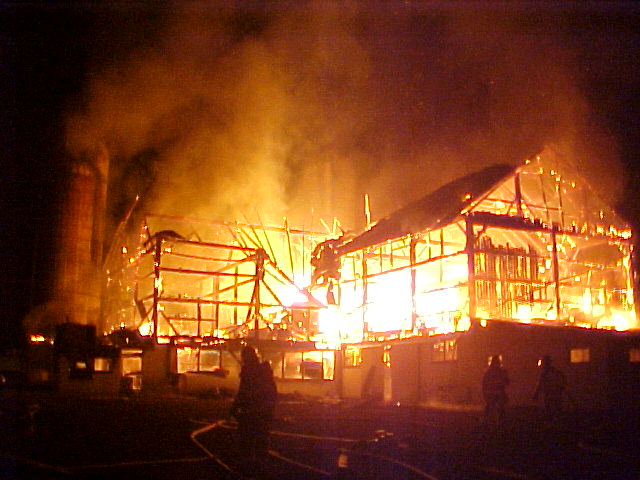
Days ago, there was a horrible fire at the Ohio Fresh Eggs company near Marseilles, Ohio, that resulted in the deaths of 250,000 chickens. (Source) That's pretty staggering when you think about it - a quarter of million. It is difficult for me to wrap my head around those numbers.

Many of the chickens died in the blaze, although a substantial number were also euthanized after the fire to put them out of their misery.

250,000

What is even more troubling is that mass animal deaths as a result of farm fires is a fairly regular occurrence. Here in Canada, pigs are often the victims of blazes.

It was almost precisely two years ago that 7,000 pigs perished in a fire in a barn at a Manitoba Hutterite community. (Source)

In January 2009, a barn fire near Hadashville, Manitoba, killed 900 hogs. (Source) Later that month, in east-central Saskatchewan, a blaze that swept through four large hog barns killed all of the animals inside. (Source) In December 2009, 1200 pigs died in a barn fire near St. Catharines, Ontario. Around the same time, 800 pigs perished in flames at a farm outside of Stratford, Ontario. (Source)

And at Wingham, Ontario, earlier this month, 5,000 pigs died in a raging inferno. (Source)

All of these tragedies had something in common: They were avoidable.

In addition to being scenes of horrific slaughter, factory farms are also tinderboxes full of flammable materials. And the animals inside of their walls have no rights. They're regarded as property. When they burn to death, their only obituary is typically a short article buried inside of a newspaper.

250,000... 900... 7,000... 1200... 5,000... 800...

It's all miles to the moon. And the victims of these fires are mere commodities in the eyes of most people.... Nothing more than numbers for the insurance company.

Imagine the final moment for those quarter of a million hens or those 7,000 pigs. All they knew was the ghastly terror of fire closing in on them, burning them to death - one of the most excruciatingly awful ways to die.

How many more reasons do we need to abolish the factory farm system? And how much longer do we have to wait until this system of mass, assembly line murder is finally done away with?

Friday, March 26, 2010

Introducing Hegans! I guess I am one!

The Boston Globe has come up with a new word to add to the already overcrowded English language:


The Globe article describes a middle-aged Boston omnivore named Joe McCain who was overweight (topping the scales at 257) and feeling lousy much of the time. At the advice of a pal, McCain eliminated all foods containing animal products from his diet - meat, eggs, milk items, etc. etc. - and became a vegan. Thanks to a combination of veganism and yoga, McCain has lost sixty pounds. Apparently, he is part of a larger nationwide trend of middle-aged guys embracing veganism.

And all this time I thought - as a convert to veganism at age 41 - I was alone! I guess there are a lot of other thirtysomething and fortysomething dudes doing what I'm doing. I am not so unique after all, it seems...

Here is a quote from the Globe article:
The buff and bright-eyed McCain is the new face of veganism: men in their 40s and 50s embracing a restrictive lifestyle to look better, rectify a gluttonous past, or cheat death. They are hegans. They are healthy. And they are here to stay. While no one was looking, guys were stepping up to the wheatgrass bar. Famous hegans include “Spider-Man’’ Tobey Maguire and singer Thom Yorke of Radiohead. Atlanta Falcons tight end Tony Gonzalez was vegan for a few years but now eats seafood and chicken on occasion.
So watch out, North America. Hegans appear to be growing in number. If you don't believe me, Salon.com has also taken note of the Hegan phenomenon. Once Hegans make it into Salon, we have found our express route to the dizzying heights of pop culture stardom. Salon says that our ranks include "cops and firefighters," and that we Hegans are men who aren't afraid to be seen "eating their veggies."

Silly stuff, to be sure. It is hard to say how many of these men are "Conscientious Hegans," which I suppose is what I am: Hegans who stopped eating animals due to the development of moral and ethical concerns about the rights of the animals that we spent most of our lives devouring. Moral Hegans, I guess you could call us. Or Mor-Hegans.

Perhaps some of the "Hegans by Convenience" will go back to eating animals (like the aforementioned Tony Gonzalez) once they've achieved whatever it was they set out to achieve. Who knows?

But at least our numbers are growing. Frankly, I don't give a damn why people become vegans. I just hope they stay vegans.

Whoops, I mean, er, uh, "Hegans."

Not to be confused with "Hegelians." Or "He-Man."

OK. I'll quit while I'm ahead.

Tuesday, March 23, 2010

Thinking of Adopting a Bunny for Easter? Support Farm Sanctuary Instead!

All across North America - in the United States and Canada - people mark the arrival of Easter in different ways. The Easter Basket full of candy, fake grass and toys is one way of celebrating the holiday. Sadly, another way involves live animals. Well-intentioned parents end up giving their children real bunnies for Easter. Rabbits are often cheap around Easter, with a lot of pet stores selling them for around ten dollars. (Source) Normally, I'd say it's a great idea to give these bunnies loving homes. But what often happens is parents buy bunnies for their kids and then eventually the families abandon these poor animals.

This is where my friends at Farm Sanctuary in Watkins Glen, New York, come in. They are urging parents not to adopt bunnies for their kids at Easter unless the families have long-term plans to provide loving homes for the animals. Instead, Farm Sanctuary is urging parents to support an animal resident at Farm Sanctuary. As the Farm Sanctuary Website notes:

The animal residents at Farm Sanctuary’s shelters, many of whom were rescued after being given as “Easter gifts,” depend on adoptive “parents” to provide them with healthy food, a safe habitat, individualized attention and veterinary care. Through the nonprofit organization’s Adopt-A-Farm Animal Project, parents can help give rescued animals a new beginning and inspire compassion in their children by sponsoring an animal in the name of their child (or in their own name). Each unique sponsorship package includes a personalized adoption certificate and beautiful color photo that make the perfect addition to any Easter basket.

What a great idea. Let's hope that before rushing out and adopting a cute bunny or chick (back in 2007, Farm Sanctuary also adopted 49 baby chicks - dyed purple, blue, pink, orange and green - from a Brooklyn pet store), parents decide to sponsor a Farm Sanctuary resident. Also, the wonderful folks at RabbitRescue.ca here in Ontario have been working hard for years to find loving homes for rabbits and they feature sponsorships, too. Check out their Website here. Unless families plan a lifelong commitment to a new member of their family, sponsoring animals is a far more humane way to go.

A Decent Showing in Atlanta...

In Atlanta, Georgia, activists staged a protest against the seal hunt in front of the Canadian consulate downtown. There weren't many of them - only about 12 - but what they lacked in numbers, they made up for in principles and integrity. The protest included gruesome undercover video scenes of the seal hunt and passing out literature. Activists urged passersby to protest the seal hunt in various ways. It wasn't a huge event, by any means, but it got the word out and showed that there are good, nonviolent ways to protest against the violent madness that is the seal hunt.

Friday, March 19, 2010

Seal Hunt Quotas on the Rise...

After that last Blog Entry, I don't want to get accused of picking on misguided militants more than those carrying out widespread systematic violence toward animals. So...

Here's the latest news on the Canadian seal hunt from AFP:

OTTAWA — Canada's fisheries minister on Monday hiked the total number of seals that hunters would be allowed to slaughter during an annual Atlantic coast hunt set to begin later this month.

The total allowable catch for harp seals this season will rise to 330,000, from 280,000 last year, while quotas for grey and hooded seals will remain unchanged at 50,000 and 8,200 animals, respectively.

The reason cited by officials for the increased quota is a growing seal population in the Gulf of St. Lawrence and in waters east of Newfoundland.

"This government is united in its support of the thousands of coastal Canadian sealers who rely on the seal hunt for their livelihood," Fisheries Minister Gail Shea said in a statement.

"The seal hunt is a sustainable activity based on sound conservation principles."

The estimated populations of the grey and hooded seal herds are over 300,000 and 600,000 respectively and "continue to grow every year."

The harp seal population, meanwhile, is estimated at 6.9 million "or more than triple what it was in the 1970s."

Around 6,000 Canadians take part in seal hunting each year along the Atlantic coast, and 25 percent of their sales came from exporting products to Europe.

The 27 European Union states in July 2009 adopted a ban on seal products, ruling the goods could not be marketed from 2010.

Canada and Greenland account for more than 50 percent of the 900,000 seals slain in the world each year. Other seal-hunting countries include Norway, Namibia, Iceland, Russia and the United States.

I hear Canadians say, over and over again, that it's wrong to oppose the seal hunt because people rely on it for their livelihood. OK, point well taken.

But far, far more whites in the American South relied on slavery for their livelihood in the 19th Century. They made the same arguments: Abolish it and the result will be a disaster for the poor souls (in this case, poor white souls) whose well-being and survival depend on it.

Similarly, today, if the cocaine trade were wiped out, numerous villages in Bolivia, Colombia and Ecuador that survive on the cocaine economy would be decimated economically. Same thing with villages in Afghanistan if heroin and opium were suddenly stamped out. A lot of struggling Afghans who rely on the heroin and opium trades would be hurt. But that doesn't legitimize those trades; it merely shows that when you get rid of some sort of lucrative economic resource, the results can be very painful and difficult for ordinary people. But the alternative of maintaining immoral industries is deeply troubling.

I am sympathetic to the people who rely on seal hunting for a living. There is no denying, however, that the practice itself is ghastly and brutal.

The seal hunt rivals factory farming in its barbarism. I don't advocate throwing pies at Gail Shea or blood at people who wear fur, and I certainly think many of the anti-seal hunt types - who traipse into Canada to protest and traipse out again - have been insensitive to the plight of the seal hunters. But I agree - 100 percent - with those who believe that this is a cruel practice.

That said, it's no crueler than manufacturing leather products. It all comes from the same place.

When I think of these things, I'm reminded of a Wisconsin serial killer named Ed Gein (1906 - 1984), who made all kinds of crafts out of the remains of the people he butchered. When police finally caught him, they found lampshades made of skin, human skulls on bedposts, scalps sewn together to make slipcovers, and various objects made of human bones.

Such discoveries shocked the world. Maybe the day will come when the way we currently use animals will prove equally shocking to future generations.

Then again, maybe not. I don't always have a hell of a lot of faith in human beings.